
Makalu

Country Profile
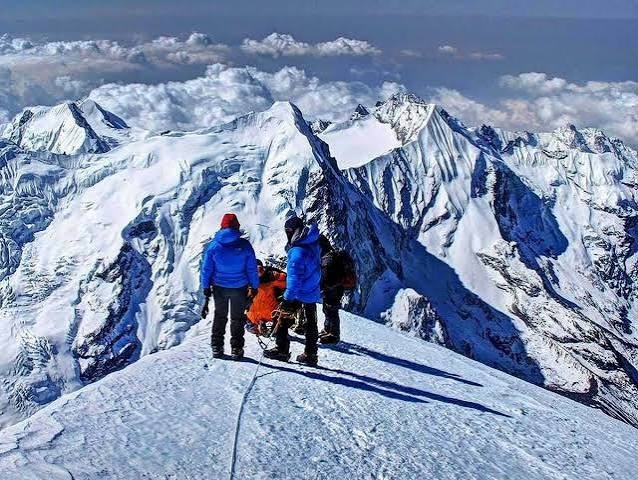
The Makalu region, located in eastern Nepal, is protected within the boundaries of Makalu Barun National Park, the world's only protected area with an elevation gain of over 8,000 meters within a single park boundary. Dominated by Mount Makalu at 8,485 meters (the fifth-highest peak on Earth) alongside Mount Chamlang at 7,319 meters and Mount Baruntse at 7,129 meters, this high Himalayan sanctuary stands as one of the ultimate adventure destinations on Earth. Stretching from tropical river valleys along the Arun and Barun rivers to massive glacial basins and mountain passes exceeding 5,000 meters, the region provides an unparalleled combination of dramatic physical landscapes, ancient mountain heritage, and legendary local hospitality.
Trekking in the Makalu region is not limited to a single trail; it encompasses a vast network of interconnected footpaths traversing two primary river valleys: the Arun and Barun. Depending on physical endurance, timeframe, and travel preferences, hikers can choose from classic base camp journeys, challenging high-pass traverses like the Sherpani Col, remote wilderness explorations, or off-the-beaten-path cultural walks. Supported by local teahouses, wilderness campsites, and certified local guides, the Makalu category offers options for both ambitious high-altitude hikers and travelers seeking iconic Himalayan views with authentic mountain living.
Rai, Limbu, and Sherpa Heritage and Mountain Traditions
The lower elevation slopes and deep valleys of the Makalu region are the ancestral homeland of the Rai and Limbu people of the Kirat ethnicity, while the higher alpine hamlets are inhabited by the Sherpa and Lhomi communities. Living in mountain villages like Num, Seduwa, Tashigaon, and Walung, these communities have developed unique cultures deeply interwoven with Kiratism, Tibetan Buddhism, and mountain life.
Along every trail, trekkers encounter sacred cultural monuments. Protocols require passing carved mani stones, chortens, and prayer flag wheels on the left-hand side (clockwise direction) as a sign of respect. High-altitude monasteries and sacred natural sites, most notably Shiva Dhara and local gompas throughout the upper Barun Valley, serve as spiritual sanctuaries where pilgrims and trekkers pause for prayer ceremonies and blessings before they proceed to higher elevations.