Makalu
Mera Peak Climbing 15 Days
Trip Code: MERA1234
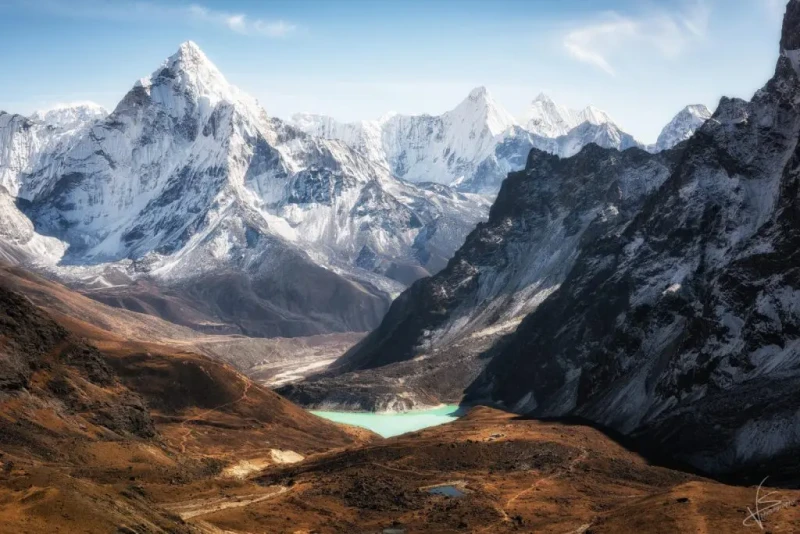
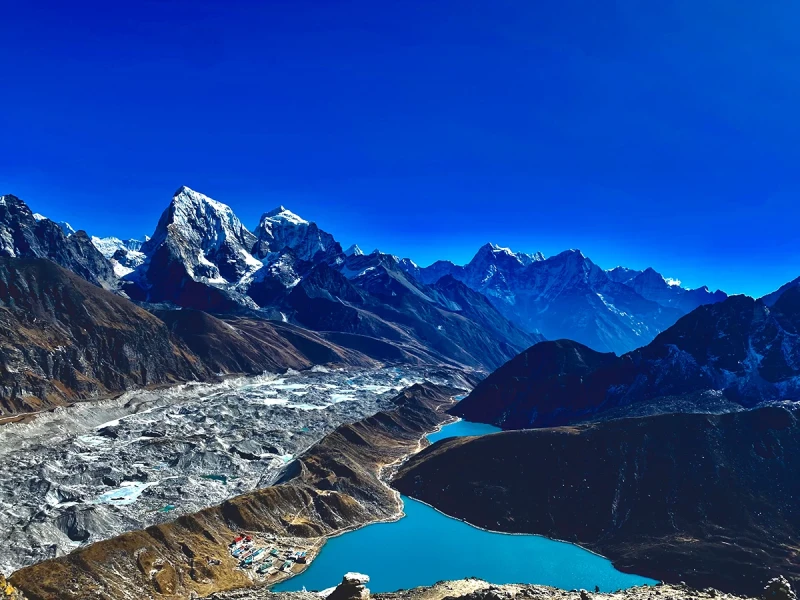
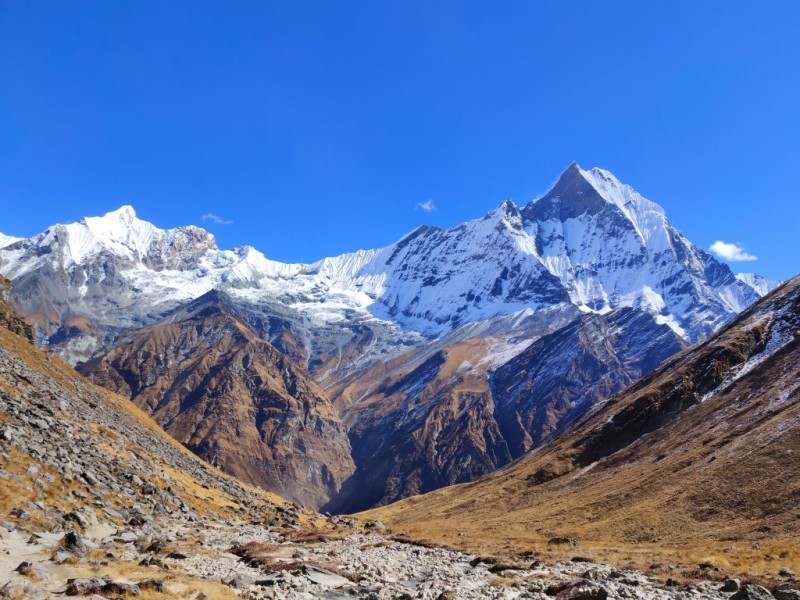
An introductory mountaineering expedition approaching through the quiet Hinku Valley to climb Nepal's highest trekking peak at 6,476 meters. Climbers navigate glaciated terrain using crampons and fixed ropes, earning 360-degree summit views of Everest, Lhotse, Makalu, Cho Oyu, and Kanchenjunga.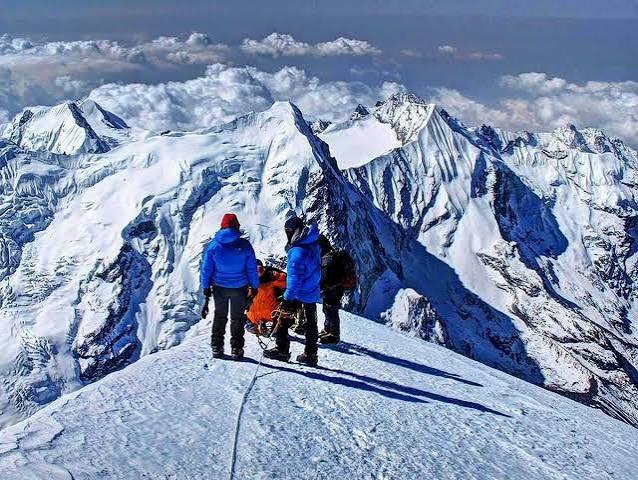






Overview
The 15 days Mera Peak climbing itinerary provides a classic high altitude mountaineering expedition in the Everest and Makalu Barun regions of Nepal. Reaching a maximum elevation of 6,476 meters at the central summit of Mera Peak, this structured trip starts and finishes in Kathmandu with scenic domestic flights to Lukla. The trekking route approaches the peak along the quiet Hinku River valley, passing through traditional Sherpa settlements, dense bamboo and rhododendron woodlands, subalpine pastures and high glacial moraines. By following the southern circuit through Paiya, Panggom and Kothe before ascending to Khare, this 15 day schedule ensures gradual acclimatization while providing safe physical progression toward Nepal's highest official trekking peak.
Trip Highlights
- Summiting Nepal's Highest Trekking Peak: Reach the summit of Mera Peak at 6,476 meters, navigating glaciers and fixed rope sections alongside certified mountain guides.
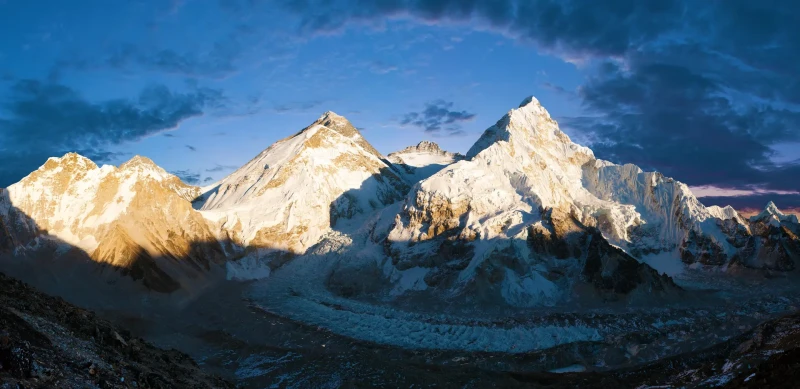
- Panoramic Views of Five 8,000-Meter Giants: Observe clear vistas of Mount Everest, Lhotse, Makalu, Cho Oyu and Kanchenjunga directly from the summit and high ridge lines.
- Gradual Approach through the Hinku Valley: Trek along quiet trails through pine, bamboo and rhododendron forests past remote settlements like Panggom, Ningsow and Kothe.
- High Alpine Glacier Experience: Learn essential mountaineering techniques during pre-climb training at Khare before ascending across the Mera Glacier to High Camp at 5,780 meters.
- Crossing Zatrwa La Pass: Complete a high altitude mountain traverse across Zatrwa La Pass at 4,600 meters on the return journey to Lukla.
- Comprehensive Expedition Safety: Benefit from structured acclimatization days, a dedicated contingency summit day and full high-altitude climbing crew support.
Itinerary
The expedition begins early in the morning with a transfer to the domestic airport terminal for a scenic flight to Tenzing-Hillary Airport in Lukla at 2,860 meters. Flying over terraced agricultural hillsides and forested valleys, the aircraft lands on the sloped mountain runway. Upon meeting the local Sherpa climbing crew and porters, travelers organize gear and begin walking along the trail heading south away from the main Everest highway.
The initial footpath bypasses busy trekking paths, descending through quiet pine and rhododendron woods toward the Surke riverbed. Passing small farming hamlets like Pakhepani and Chheplung, the trail crosses mountain streams and ascends gently through bamboo groves. The day concludes with a pleasant walk into Paiya, also known as Chutok, at 2,730 meters for a quiet teahouse stay.
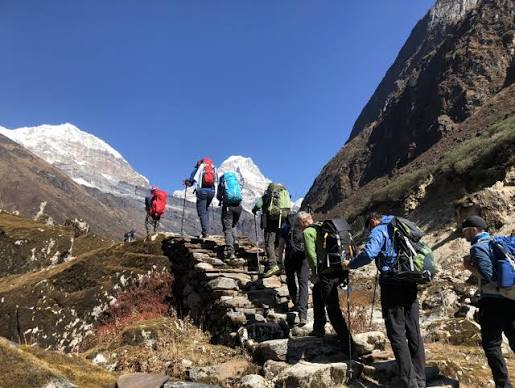
Leaving Paiya after breakfast, the path ascends toward the Kari La Pass through dense forests of oak, bamboo and rhododendron. The trail can be narrow and slippery underfoot, requiring steady pacing while navigating stone steps and forest roots. As the trail emerges onto higher hill contours, trekkers catch views of the Dudh Koshi River valley and surrounding mid-hill ridges.
Descending gradually from the pass, the route leads into the traditional farming village of Panggom at 2,850 meters. Panggom is a scenic settlement inhabited mainly by Sherpa and ethnic hill communities, featuring terraced farmlands, wooden houses and a local monastery. Travelers spend the afternoon exploring the village and enjoying local hospitality at a family operated lodge.
Leaving Panggom in the morning, the trail climbs over Panggom La Pass at 3,174 meters before turning northbound along the hillside contour. The path traverses quiet wilderness terrain, crossing mountain streams including the Peseng Kharka Khola and Ningsow Khola. Trekkers walk under dense forest canopies, taking in views of rolling green hills and distant snow peaks.
The route continues through subalpine woodlands, offering a quiet environment away from commercial trekking circuits. By late afternoon, trekkers arrive at the small settlement of Ningsow at 2,863 meters. Travelers check into a simple mountain lodge for dinner, a hot beverage and an early night.
Leaving Ningsow, the trail embarks on a series of ascents and descents through pristine forest terrain, entering the protected boundary of Makalu Barun National Park. The footpath leads up to Ramailo Danda, a scenic ridge viewpoint that offers early views of Mera Peak and surrounding high ridges. The area is rich in flora and fauna, where alert hikers may spot mountain birdlife and wildlife.
From Ramailo Danda, the trail follows the Pasang Lhamu route, winding down through bamboo thickets and dense woodland toward the river basin. Crossing small wooden bridges over mountain streams, trekkers arrive at Chhatra Khola at 2,800 meters. The secluded riverside camp provides basic teahouse lodging surrounded by forest sounds.
Leaving Chhatra Khola after breakfast, the trail heads north along the main approach path toward Mera Peak. The footpath follows the banks of the Majang Khola before merging with the main trail running alongside the roaring Hinku Khola River. Walking through high pine and rhododendron forests, trekkers experience a steady increase in elevation.
The trail passes Tashing Ongma, where seasonal tea shops offer warm drinks and rest stops. Crossing a wooden suspension bridge over the Sanu Khola, the path enters the wide valley floor of Kothe at 3,691 meters. Kothe is a prominent trekking settlement surrounded by high granite cliffs and snow-capped summits, offering comfortable teahouse lodging.
Leaving Kothe in the morning, the trail follows the ridge line along the western bank of the Hinku Khola. As elevation increases past 4,000 meters, tree lines fade into subalpine shrubs and open rocky terrain. The trail leads past Gondishung, a seasonal summer herding settlement where travelers stop for lunch and view the historic 200-year-old Lungsumgba Gompa carved into a rock face.
Beyond Gondishung, the path continues alongside glacial meltwater streams with open view lines of Mera Peak rising at the head of the valley. A short afternoon walk brings trekkers into Thaknak at 4,358 meters, a seasonal grazing village surrounded by high peaks. Travelers settle into local teahouses to rest and adjust to the higher altitude.
Leaving Thaknak, the trail ascends across the lateral moraine of the Dig Glacier. The route climbs steadily over rocky glacial debris and switchback trails, offering direct views of the Hinku Nup and Shar glaciers. Trekkers pass through Dig Kharka, a high alpine pasture used by yak herders, before tackling the final steep rise toward Khare.
Arriving in Khare at 5,045 meters, trekkers reach the primary staging base for the summit attempt. Khare features established teahouses situated directly facing the north face of Mera Peak. Travelers spend the afternoon resting, drinking warm fluids and organizing high altitude clothing and gear.
A dedicated rest and training day in Khare allows climbers to acclimatize and practice mountaineering skills before moving onto the glacier. In the morning, climbing guides conduct a practical training session on nearby ice slopes, instructing participants on fixed rope line techniques, harness fitting, crampon usage, ice axe handling and ascending with mechanical jumar devices.
The afternoon is reserved for gear checks, packing high camp equipment and resting inside warm teahouse dining halls. Spending a second night at 5,045 meters boosts red blood cell production, helping climbers build the physical confidence and adaptation needed for high altitude conditions.
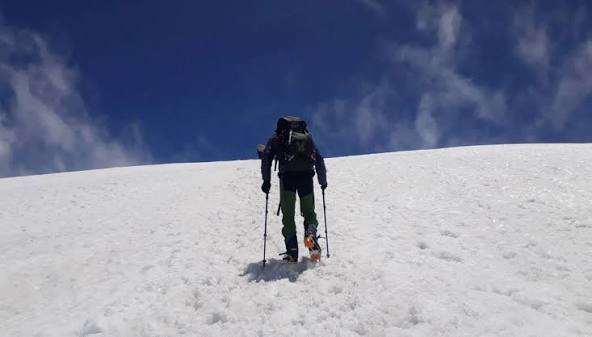
Leaving Khare after breakfast, the expedition steps onto the Mera Glacier, putting on crampons and roping up for safety. The trail ascends steadily over flat icy sections and snow-covered slopes, passing Mera La Pass at 5,415 meters before continuing along the rocky ridge line toward High Camp.
Arriving at Mera High Camp at 5,780 meters by early afternoon, climbers settle into tented accommodations pitched on a rocky shelf. High Camp provides panoramas of Mount Everest, Lhotse, Nuptse, Makalu, Cho Oyu and Baruntse. Climbers eat an early dinner, prepare water flasks and sleep early in preparation for the pre-dawn summit push.
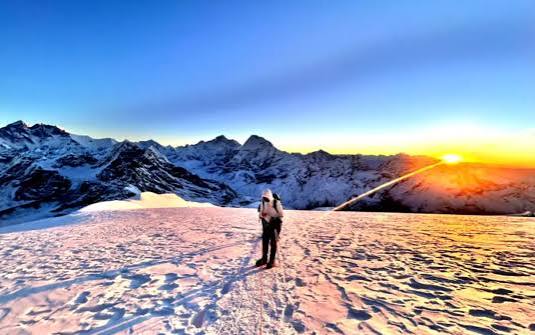
The summit push begins pre-dawn around 2:00 AM under headlamp light. Climbers rope up and ascend gradual snow slopes across the upper glacier, navigating icy mountain air and cold winds. The final 30 meters beneath the central summit involve a steep snow slope requiring fixed rope ascenders and safety carabiners to reach the top.
Reaching the summit of Mera Peak at 6,476 meters at sunrise delivers views across Mount Everest, Lhotse, Makalu, Cho Oyu and Kanchenjunga. After celebrating and taking photographs, climbers carefully descend back to High Camp for warm tea, then continue down the glacier to Khare at 5,045 meters for a well-earned rest and overnight teahouse stay.
This day is reserved as a buffer for unfavorable weather, high winds or extra acclimatization needs during the summit push. If the summit was successfully achieved on Day 10, this day serves as a rest day in Khare or allows a more relaxed walking pace during the return trek down the valley. Having a built-in contingency day significantly increases overall expedition success and safety.
Leaving Khare after breakfast, the expedition begins the return journey, descending down the Hinku Valley. The trail retraces the glacial moraines past Thaknak and Gondishung, with breathing becoming noticeably easier as elevation drops.
Re-entering the forest zone near Kothe at 3,691 meters, travelers enjoy warmer temperatures and richer oxygen levels. The afternoon is spent relaxing in comfortable teahouse lodges, celebrating the successful peak ascent with team members and climbing guides.
Leaving Kothe, the trail branches off the lower approach route, turning west toward the high mountain wall separating the Hinku and Dudh Koshi valleys. The footpath ascends steeply through dense rhododendron and pine forests, climbing out of the river gorge onto high ridge pastures.
The trail leads up toward Taktho and past seasonal herding hamlets before reaching Thuli Kharka at 4,300 meters. Thuli Kharka is a wide alpine basin situated below Zatrwa La Pass, offering simple teahouses for dinner and rest before crossing the pass the following morning.
The final mountain challenge begins early with an uphill trek from Thuli Kharka to cross Zatrwa La Pass at 4,600 meters. Navigating rocky ridges and stone trails, trekkers reach the pass crest to enjoy views across the Hinku Valley and surrounding peaks before beginning the long downhill descent.
Crossing the pass leads onto the western slopes facing Lukla. The trail descends past Chutanga through thick pine and oak forests, flattening out as it approaches the town edge. Arriving in Lukla at 2,860 meters marks the completion of the trekking loop, where the team gathers for a celebratory final dinner.
Climbers board an early morning domestic flight from Lukla back to Kathmandu or Ramechhap, taking in final aerial views of the Himalayan range from the aircraft window. Upon landing, private vehicle transport transfers travelers back to their hotel in Kathmandu.
The remainder of the day is free for resting, hot showers and personal leisure. Travelers can spend the afternoon exploring Thamel, shopping for souvenirs or visiting local cafes. Day 15 marks the formal completion of the 15 days Mera Peak climbing expedition.
Cost Include
- Domestic flight tickets between Kathmandu or Ramechhap and Lukla including airport taxes.
- Airport transfers in Kathmandu via private vehicle.
- NMA Mera Peak climbing permit and garbage deposit fees.
- Makalu Barun National Park permit and local area authority permits.
- Teahouse accommodation during the trek and high quality tented accommodation at High Camp.
- Daily breakfast, lunch and dinner throughout the trekking and climbing period.
- Professional IFMGA / NMA certified Sherpa climbing guide, trek guide and support porters.
- Group climbing equipment including fixed ropes, snow bars and ice screws.
- Hotel accommodation in Kathmandu as specified in the package.
- All applicable government taxes, service charges and staff insurance.
Cost Exclude
- International airfare to and from Nepal along with Nepal entry visa fees.
- Personal travel, medical and high-altitude emergency helicopter evacuation insurance.
- Personal climbing equipment (crampons, ice axe, harness, mountaineering boots, helmet, ascender, carabiners).
- Personal expenses such as laundry, hot showers, Wi-Fi access and electronic device charging fees.
- Soft drinks, alcoholic beverages and extra personal snacks.
- Tips for climbing guides, trek guides, cooks and porters.
- Single supplement hotel charges or personal extra stay days.
Important Notes
- Flight Operations and Ramechhap Redirection: During peak spring and autumn seasons, Lukla flights frequently operate out of Ramechhap Airport, requiring a 4 to 5 hour early morning road transfer from Kathmandu to Ramechhap.
- Personal Climbing Gear Rental: Personal climbing gear such as plastic mountaineering boots, crampons, harnesses and ice axes can be rented in Kathmandu or Khare if not brought from home.
- Buffer Contingency Day: High mountain weather can cause sudden wind changes or snowstorms, making the built-in contingency day crucial for summit safety.
- High Altitude Clothing: Pack heavy insulated down jackets rated for -20°C, thermal base layers, windproof outer shells, mountaineering gloves, thermal beanies and UV protection glacier glasses.
- Cash Provisions: Carry sufficient Nepalese cash from Kathmandu for personal expenses, as ATMs are unavailable along the Hinku Valley past Lukla.
Photo Gallery