Everest
Gokyo Lakes Trek 10 Days
Trip Code: GKYO1234
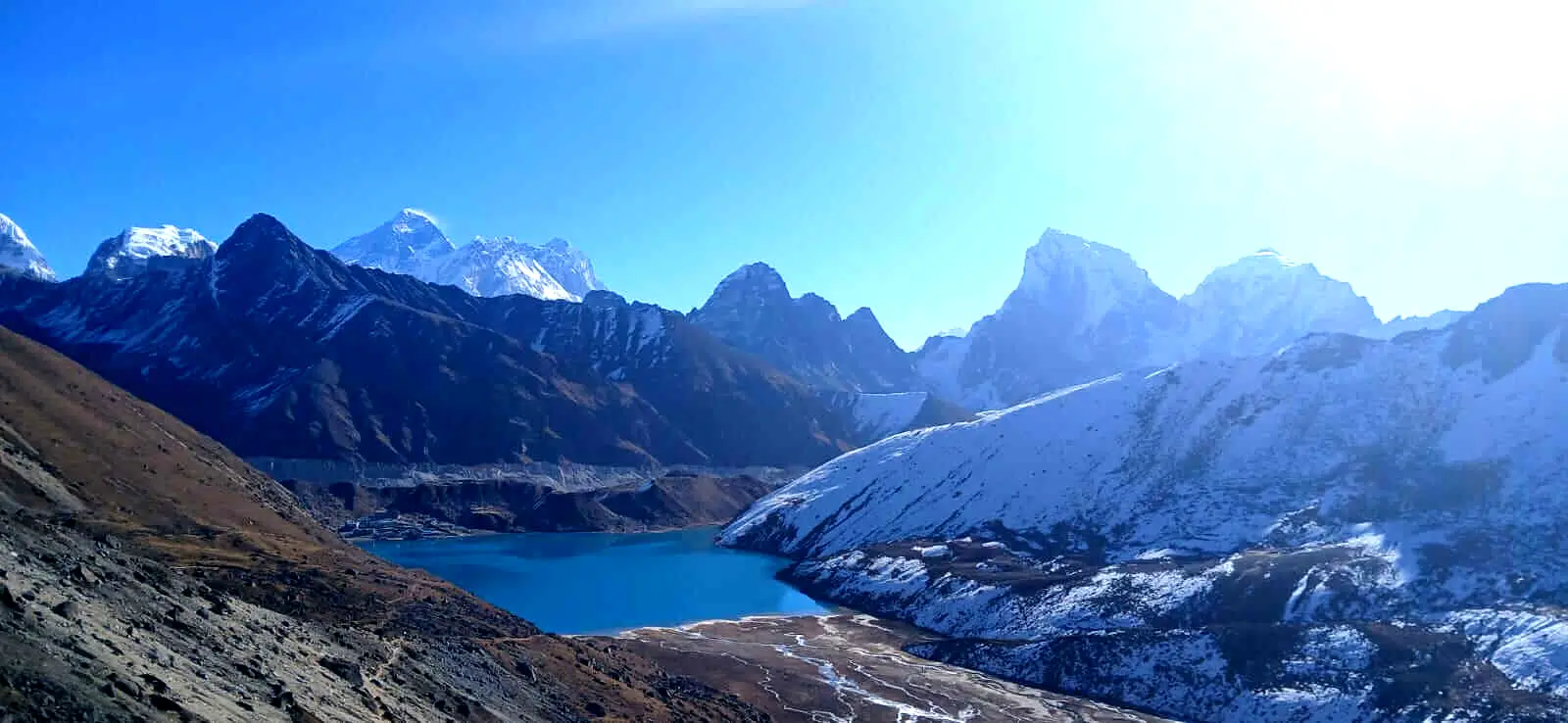
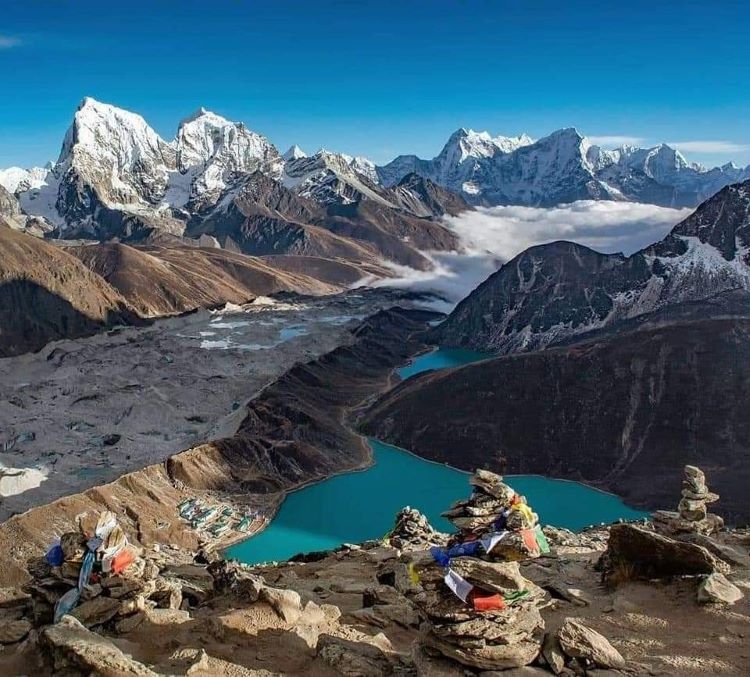
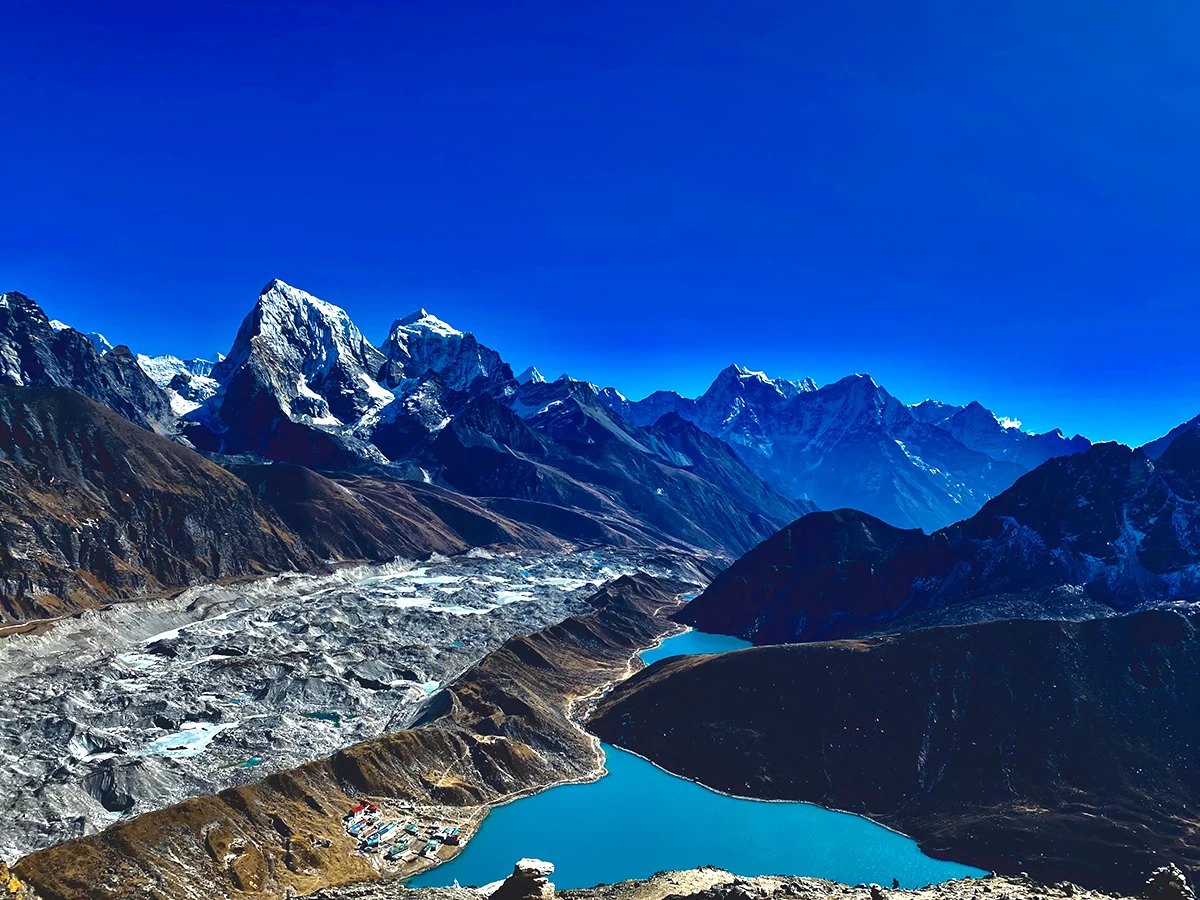
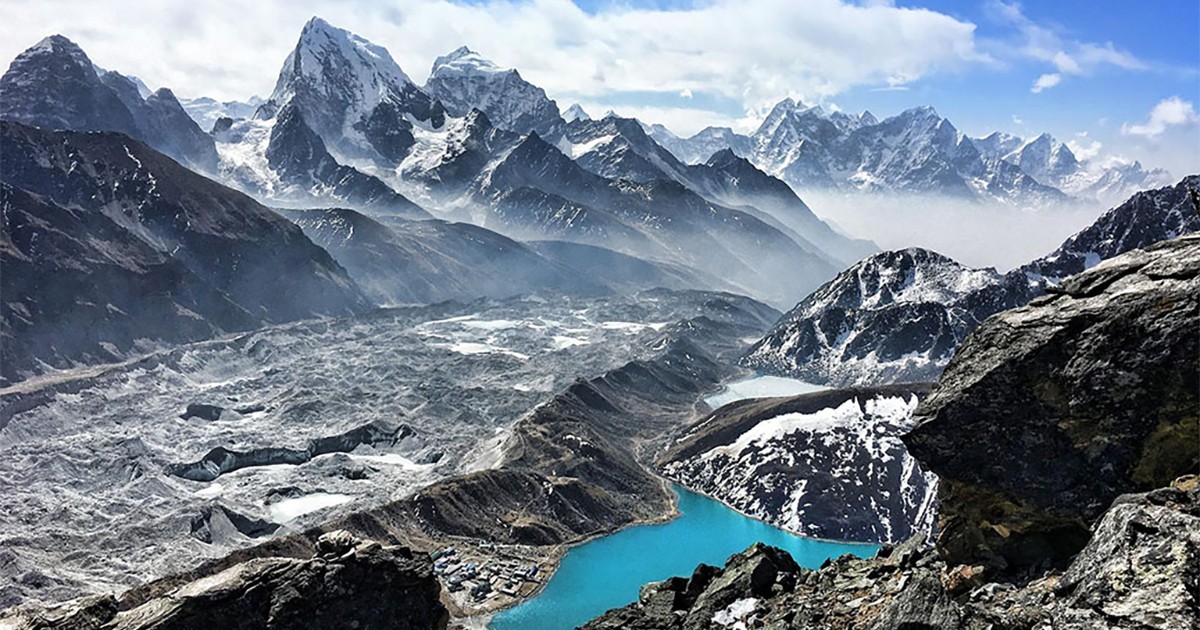
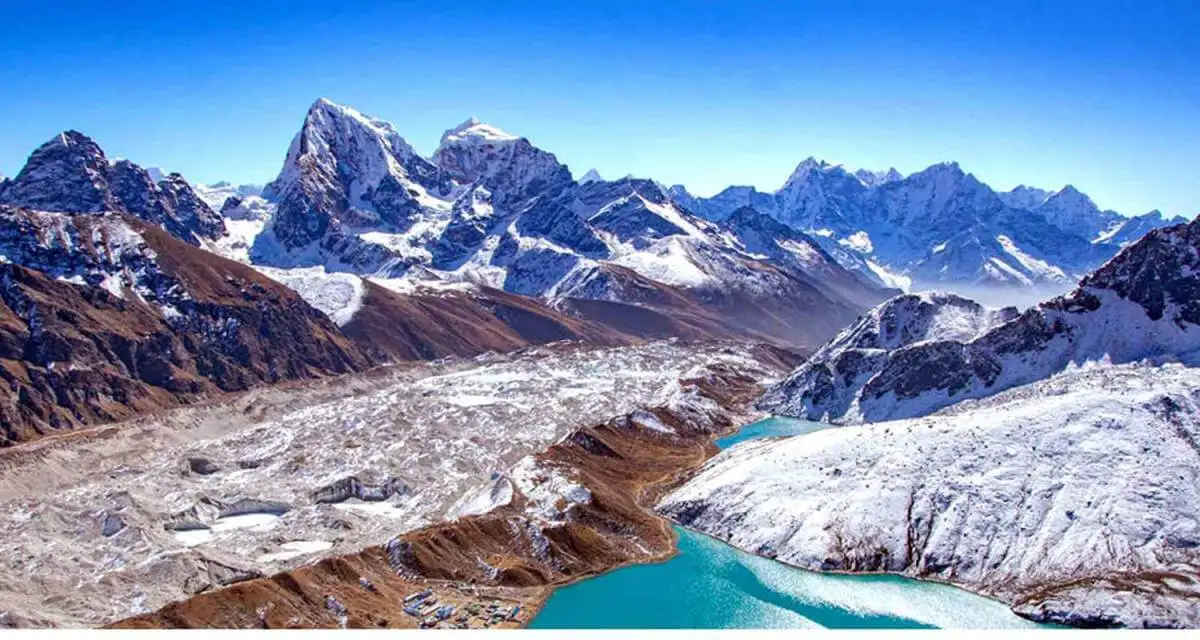
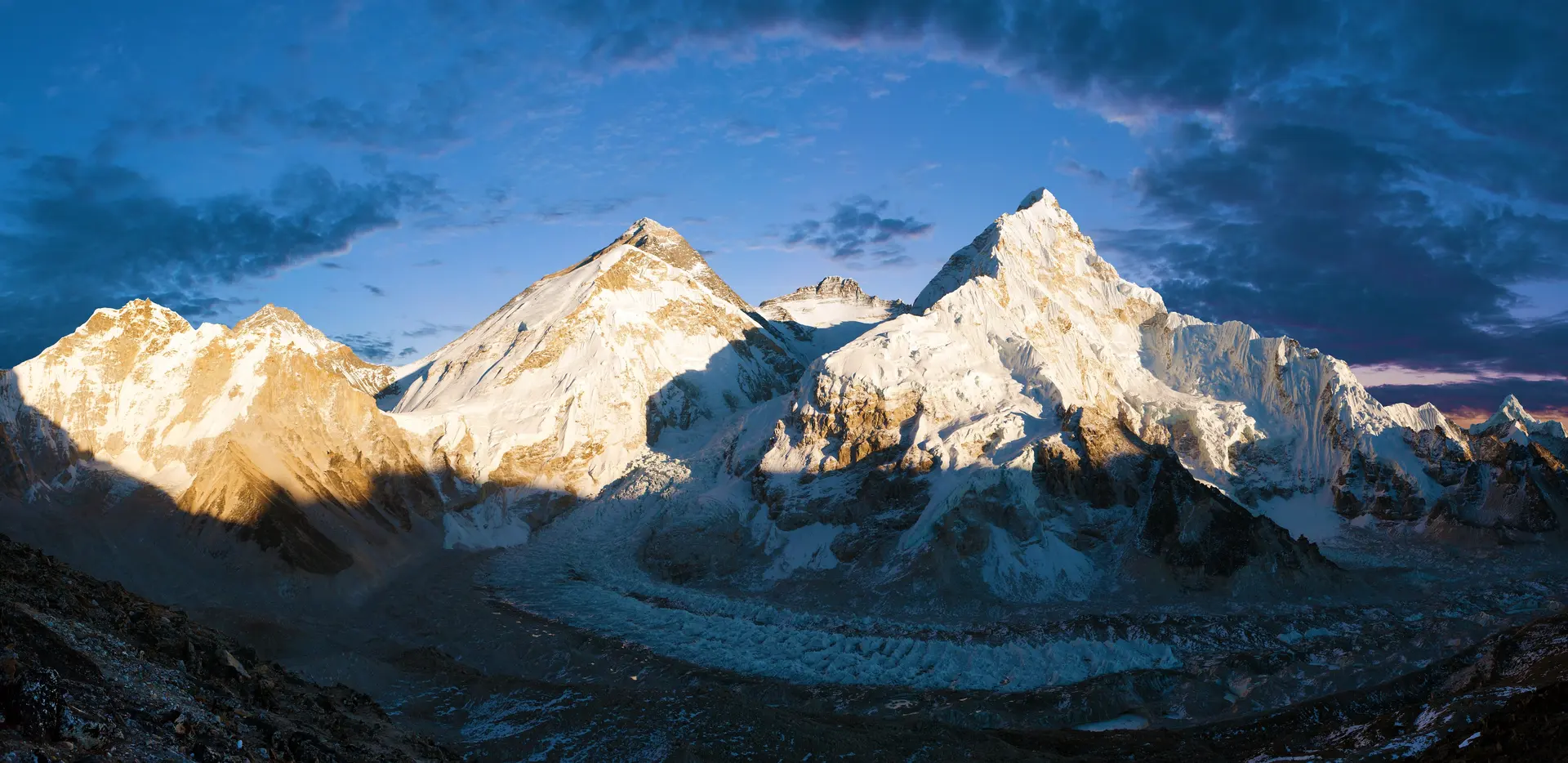
A scenic alternative to the main Everest trail leading through the Dudh Koshi valley to the turquoise glacial lakes of the Gokyo Sanctuary. The journey features an early morning climb of Gokyo Ri (5,360m) overlooking the Ngozumpa Glacier, Mount Everest, Lhotse, Makalu, and Cho Oyu.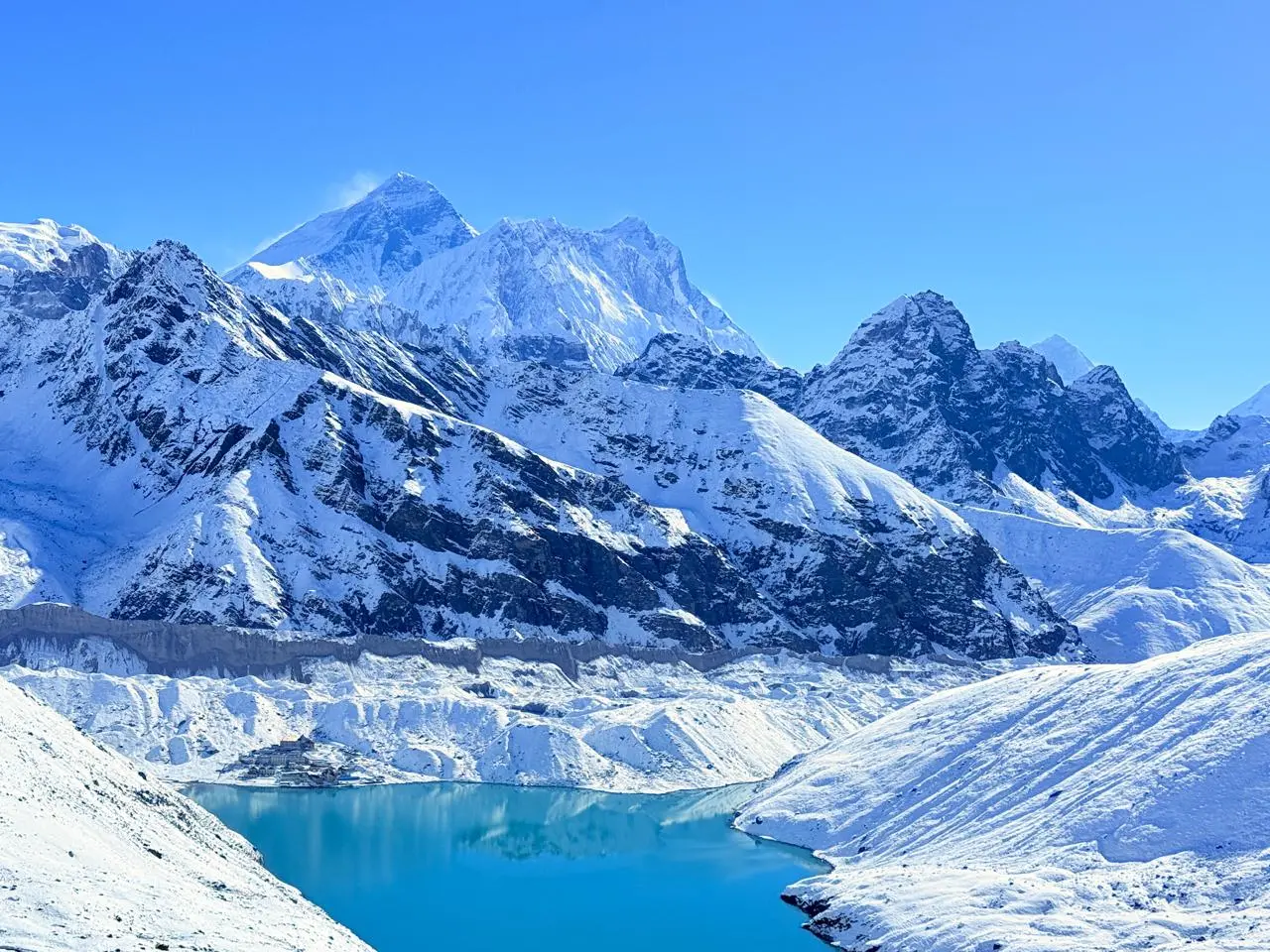






Overview
The 10 days Gokyo Lakes trek offers an extraordinary high altitude journey through the peaceful glacial valleys of the Everest region in Nepal. Reaching a maximum elevation of 5,360 meters at the summit of Gokyo Ri, this structured mountain itinerary starts and finishes in Kathmandu with scenic domestic flights to Lukla. The trail leads trekkers away from the busier main Everest Base Camp highway past Namche Bazaar, ascending along the Dudh Koshi River valley into the Gokyo Sanctuary. Trekkers walk past dense rhododendron woodlands, subalpine pastures and high glacial moraines, arriving at a series of pristine turquoise lakes fed by surrounding Himalayan glaciers.
Trip Highlights
- Panoramas from Gokyo Ri: Climb Gokyo Ri at 5,360 meters for early morning views across Mount Everest, Lhotse, Makalu and Cho Oyu.
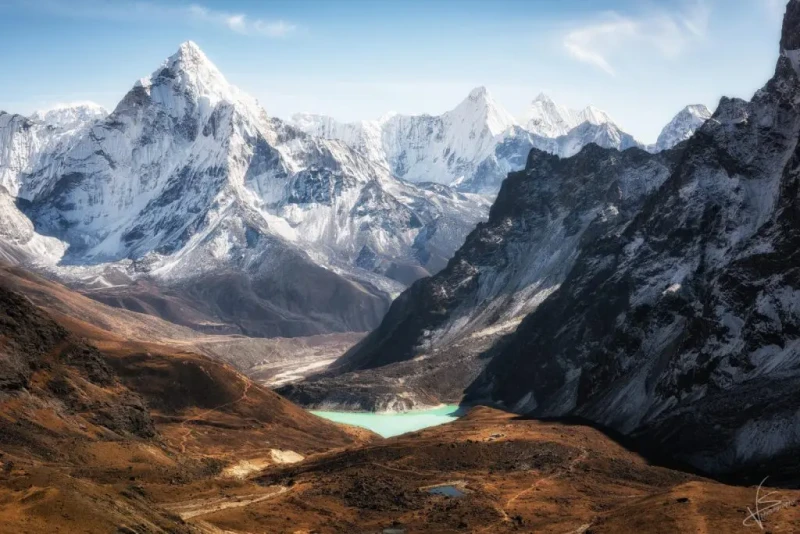
- Turquoise Glacial Lakes: Explore the high altitude Gokyo Lakes, a series of sacred turquoise water bodies situated alongside the Ngozumpa Glacier.
- Ngozumpa Glacier Vistas: Walk alongside the longest ice glacier in the Himalayas, taking in views of lateral moraines and frozen ice formations.
- Cultural Capital of Namche Bazaar: Spend two nights in the Sherpa mountain town of Namche Bazaar, visiting local markets, bakeries and Sherpa heritage museums.
- Quieter Mountain Trails: Experience a serene wilderness trek through the Dudh Koshi valley, enjoying quieter paths compared to standard base camp routes.
- Mountain Flights to Lukla: Enjoy a scenic flight between Kathmandu or Ramechap and Tenzing-Hillary Airport in Lukla, featuring views of snow-capped peaks.
Practical Planning and Traveler Guide
The 10 days Gokyo Lakes trek is a physically demanding high altitude journey that requires thorough preparation. Trekkers should establish a consistent physical training regimen 6 to 8 weeks prior to departure, focusing on cardiovascular endurance, leg strength and core stability. Running, cycling, stair climbing and hiking with a weighted backpack build the stamina needed for 5 to 7 hours of daily walking over steep, uneven terrain. Utilizing two lightweight, adjustable trekking poles reduces knee strain during downhill descents. Spring from March to May and autumn from September to November offer clear skies, stable weather and optimal visibility across the Gokyo Valley.
Altitude Awareness and Pacing
Ascending to 5,360 meters at Gokyo Ri requires strict adherence to altitude safety guidelines and deliberate physical pacing. Trekkers must walk at a slow, measured speed, avoiding rapid exertion on uphill sections. Maintaining a daily fluid intake of 3 to 4 liters of clean water aids acclimatization and offsets high altitude dehydration. Early symptoms of Acute Mountain Sickness include persistent headaches, nausea, loss of appetite, dizziness and severe fatigue. Travelers should monitor their health continuously and communicate any discomfort immediately to their mountain guide, as descending to lower elevations remains the primary remedy for persistent symptoms.
Required Permits
Foreign trekkers entering the Gokyo region must secure two mandatory official permits prior to setting out on the trail.
- Sagarmatha National Park Entry Permit: Covers environmental conservation and entry into protected park lands, costing 3,000 Nepalese Rupees (approximately 22 to 25 US Dollars) for foreign nationals and 1,000 Nepalese Rupees for SAARC nationals.
- Khumbu Pasang Lhamu Rural Municipality Permit: Replaced the traditional TIMS card in the Khumbu region to support local infrastructure and trail maintenance, costing 2,000 to 3,000 Nepalese Rupees (approximately 15 to 22 US Dollars).
- Registration Details: Both permits can be obtained at official entry counters in Lukla and Monjo. Travelers should carry their valid passport along with physical passport photos for registration checks.
Teahouse and Dining
Lodging along the Gokyo Lakes route consists of family operated mountain teahouses providing twin single rooms with basic mattresses and shared bathroom facilities.
- Teahouse Amenities: Heated communal dining halls serve as the central gathering point in the evening. Charging electronic devices costs between $3.2 to $19.75 USD per session, while wireless internet cards range from $3.29 to $7.90 USD Nepalese Rupees depending on elevation.
- Nutritious Meals: Teahouse menus offer a wide range of energy rich meals, including traditional Dal Bhat made with rice, lentil soup and vegetable curry that comes with complimentary refills. Garlic soup, fried rice, noodle dishes, porridge, eggs and warm tea are widely served across all settlements. Single use plastic water bottles are restricted in higher regions, so trekkers carry reusable bottles filled with boiled or treated water.
Itinerary
The adventure begins early in the morning with a transfer to the airport for a scenic flight to Tenzing-Hillary Airport in Lukla at 2,860 meters. Flying over green mid-hill valleys and snow-capped peaks, the twin-otter aircraft touches down on the sloped runway in Lukla. Upon meeting the local mountain guide and porters, trekkers organize gear and begin walking down stone-paved paths through the mountain town.
Stepping onto the main footpath, the trail descends gently into the Dudh Koshi River valley past traditional Sherpa hamlets such as Chheplung and Ghat. Trekkers pass carved mani stones, spinning prayer wheels and hanging prayer flags while taking in views of Kusum Kanguru. The easy introductory walk follows forested riverbanks to Phakding at 2,610 meters, where travelers check into comfortable teahouses for an overnight stay.
Leaving Phakding after breakfast, the trail heads north along the banks of the Dudh Koshi River, crossing several high suspension bridges hung across the gorge. The path passes through Tok Tok and Bengkar before reaching Monjo, the official entrance gate to Sagarmatha National Park. After park permits are registered, the route descends to Jorsale and follows the riverbank to the high Hillary Suspension Bridge.
Crossing the suspension bridge brings the trek to its first sustained physical challenge, a steep climb up Namche Hill through scented pine forests. At a clearing halfway up the trail, trekkers stop at a mountain viewpoint to catch their first distant sight of Mount Everest peaking over the Lhotse ridge. Continuing up stone switchbacks, the trail opens into the horseshoe-shaped mountain amphitheater of Namche Bazaar at 3,440 meters for an overnight teahouse stay.
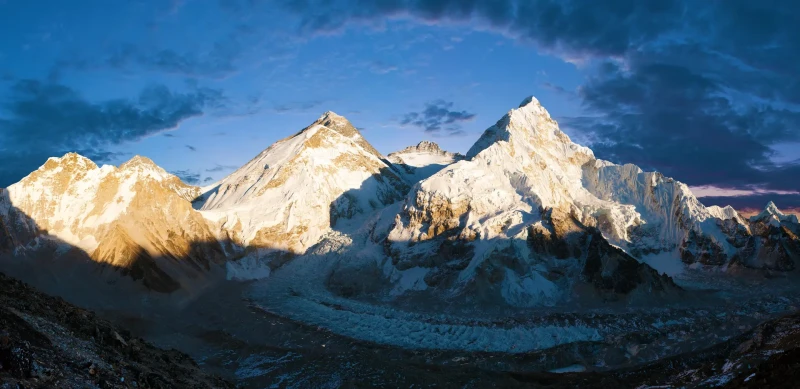
A mandatory acclimatization day in Namche Bazaar allows the body time to adapt to lower oxygen levels before advancing higher into the mountains. In the morning, trekkers undertake an acclimatization hike up to the Everest View Hotel at 3,880 meters or the high Sherpa villages of Khumjung and Khunde. The ridge walk rewards hikers with clear views of Everest, Lhotse, Nuptse, Ama Dablam and Thamserku.
Returning to Namche Bazaar by midday, the afternoon offers leisure time to explore the commercial hub of the Khumbu region. Trekkers can visit the Sherpa Culture Museum, browse local shops, visit high-altitude bakeries and observe traditional mountain life. Spending a second night in Namche Bazaar helps build essential endurance and red blood cell production for the days ahead.
Leaving Namche Bazaar in the morning, the trail follows a high scenic path overlooking the Imja Khola valley before branching off the main Everest Base Camp highway near Sanasa. The footpath climbs steadily up stone steps toward the hilltop pass of Mong La at 3,970 meters, offering clear vistas of Ama Dablam, Kantega and Thamserku. Mong La provides an ideal spot to stop for light refreshments while taking in mountain views.
From Mong La, the trail descends steeply through shaded forests down to the riverbank at Phortse Tenga. Crossing the river bridge, the path embarks on a long afternoon climb through dense rhododendron, oak and bamboo woodlands. The forest gradually thins as the elevation rises, bringing trekkers into the hillside settlement of Dole at 4,200 meters for a quiet teahouse stay.
Leaving Dole after breakfast, the trail climbs along an open subalpine ridge high above the Dudh Koshi River valley. Trekkers walk past summer yak pastures and stone-walled huts, enjoying wide view lines of Cho Oyu, Kantega and Thamserku. The footpath undulates across grassy slopes, providing an enjoyable high altitude ridge walk.
The trail passes through the small settlements of Lhabharma and Luza before arriving in the open valley of Machhermo at 4,470 meters. Machhermo is situated in a wide basin below mountain peaks, offering comfortable teahouses and a dedicated rescue post where health lectures on high altitude adaptation are conducted during peak seasons.
The trek continues upward out of Machhermo, climbing a ridge that opens into the wide upper valley of the Dudh Koshi River. The footpath leads toward the terminal moraine of the massive Ngozumpa Glacier, where the trail flattens alongside the glacial riverbed. Trekkers soon reach the First Lake (Longpongo) at 4,690 meters, marking the entrance into the sacred Gokyo Lakes basin.
Continuing along the trail, hikers pass the Second Lake (Taboche Tsho) with its striking blue waters reflecting nearby peaks. The path finishes beside the Third Lake (Dudh Pokhari), on whose shores sits the picturesque village of Gokyo at 4,790 meters. Trekkers check into local teahouses, surrounded by turquoise waters, high glaciers and the summit of Cho Oyu.
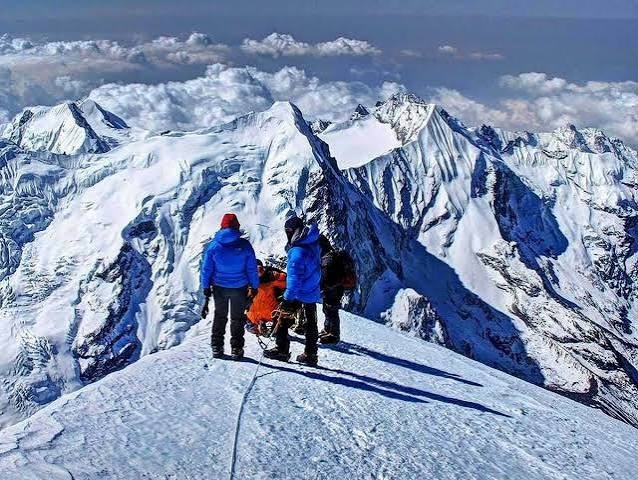
The day starts pre-dawn around 4:30 AM with a flashlight-lit climb up the steep switchbacks of Gokyo Ri at 5,360 meters. Reaching the rocky summit before sunrise, trekkers witness morning light illuminate four 8,000-meter giants including Mount Everest, Lhotse, Makalu and Cho Oyu, alongside the turquoise Gokyo Lakes and Ngozumpa Glacier stretching below.
After capturing photographs, trekkers descend back to Gokyo Village for a warm breakfast and gear packing. The return trek heads downhill past the lakes and through Machhermo, retracing the scenic valley path. Descending into richer oxygen levels, trekkers arrive back in Dole at 4,200 meters for a restful overnight stay.
Leaving Dole in the morning, the trail descends through shaded forests of rhododendron and bamboo down to the river crossing at Phortse Tenga. From the riverbank, the footpath ascends stone staircases back up to the high pass of Mong La.
From Mong La, the trail contours smoothly along hillside slopes, rejoining the main Everest trail past Sanasa and Kyangjuma. Easy walking leads back into the lively Sherpa capital of Namche Bazaar at 3,440 meters. Returning to lower elevations, travelers can enjoy hot showers, bakeries and teahouse relaxation.
The final full day on foot involves a long downhill descent from Namche Bazaar back to Lukla. The trail descends the steep stone switchbacks of Namche Hill, crossing the Hillary Suspension Bridge and exiting Sagarmatha National Park at Monjo. Trekkers continue past Bengkar, Phakding and Ghat along the Dudh Koshi River valley.
The final section requires a gentle uphill climb from the riverbed back to the town of Lukla at 2,860 meters. Upon reaching Lukla, trekkers complete their foot journey. The evening is spent celebrating with mountain guides, porters and team members at a local lodge.
Trekkers board an early morning domestic flight from Lukla back to Kathmandu or Ramechap, taking in final aerial views of the Himalayan range from the plane window. Upon landing at the airport, private transport transfers travelers back to their hotel in Kathmandu.
The remainder of the day is free for resting, hot showers and personal leisure. Travelers can spend the afternoon exploring the colorful streets of Thamel, shopping for local crafts or visiting local cafes. Day 10 marks the formal conclusion of the 10 day Gokyo Lakes trek schedule.
Cost Include
- Ground and domestic flight transportation between Kathmandu or Ramechap and Lukla including airport taxes.
- Sagarmatha National Park Entry Permit and Khumbu Pasang Lhamu Rural Municipality Permit fees.
- Teahouse accommodation throughout the 9 nights 10 days trekking itinerary.
- Drinking water, a sleeping bag, and daily breakfast, lunch, and dinner throughout the trekking period.
- Licensed, Experienced English-Speaking Trekking Guides and Professional Support Porters
- All applicable government taxes and service charges.
Cost Exclude
- International airfare to Nepal and Nepal entry visa fees.
- Personal travel, medical and high altitude emergency evacuation insurance.
- Internet access, Wi-Fi cards and device charging fees at teahouses.
- Soft drinks, alcoholic beverages and extra snacks.
- Hot showers and laundry services at teahouses.
- Tips for mountain guides, drivers and porters.
- Personal expenses and trekking gear.
Important Notes
- Flight Operations and Ramechap Redirection: During peak spring and autumn seasons, flights to Lukla operate from Ramechap Airport rather than Kathmandu, requiring a 4 to 5 hour early morning road transfer from Kathmandu to Ramechap.
- Buffer Days for Flight Delays: High mountain weather in Lukla can cause sudden flight delays, making it essential for travelers to carry flexible buffer days in their travel schedule.
- Essential High Altitude Clothing: Pack moisture-wicking thermal base layers, fleece mid-layers, a high quality down jacket rated for negative temperatures, windproof outer trousers and jacket, warm gloves and a thermal beanie.
- Key Trekking Equipment: Bring a sleeping bag rated for sub-zero temperatures, a sturdy 30 to 40 liter daypack with a rain cover, UV sunglasses, sunscreen, a headlamp with extra batteries and two trekking poles.
- Cash Provisions: Carry sufficient Nepalese cash from Kathmandu or Namche Bazaar for personal expenditures, as ATMs are unavailable along the upper Gokyo Valley.
- Comprehensive Medical Insurance: Secure travel insurance that explicitly covers high altitude trekking up to 5,500 meters and emergency helicopter evacuation
Photo Gallery