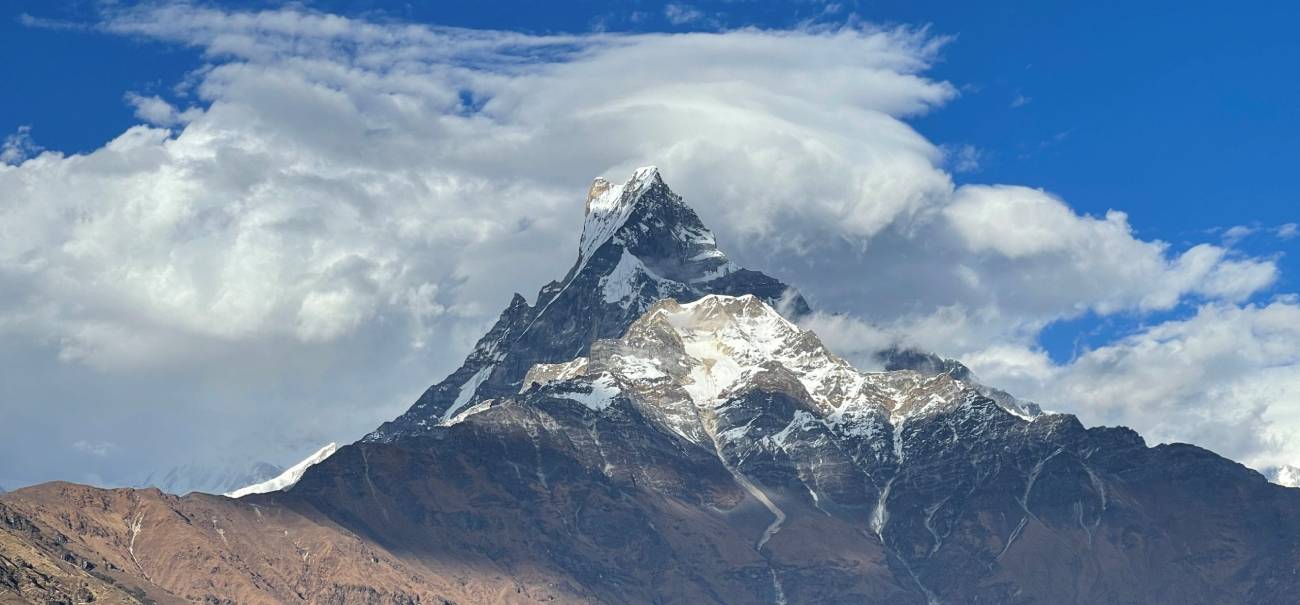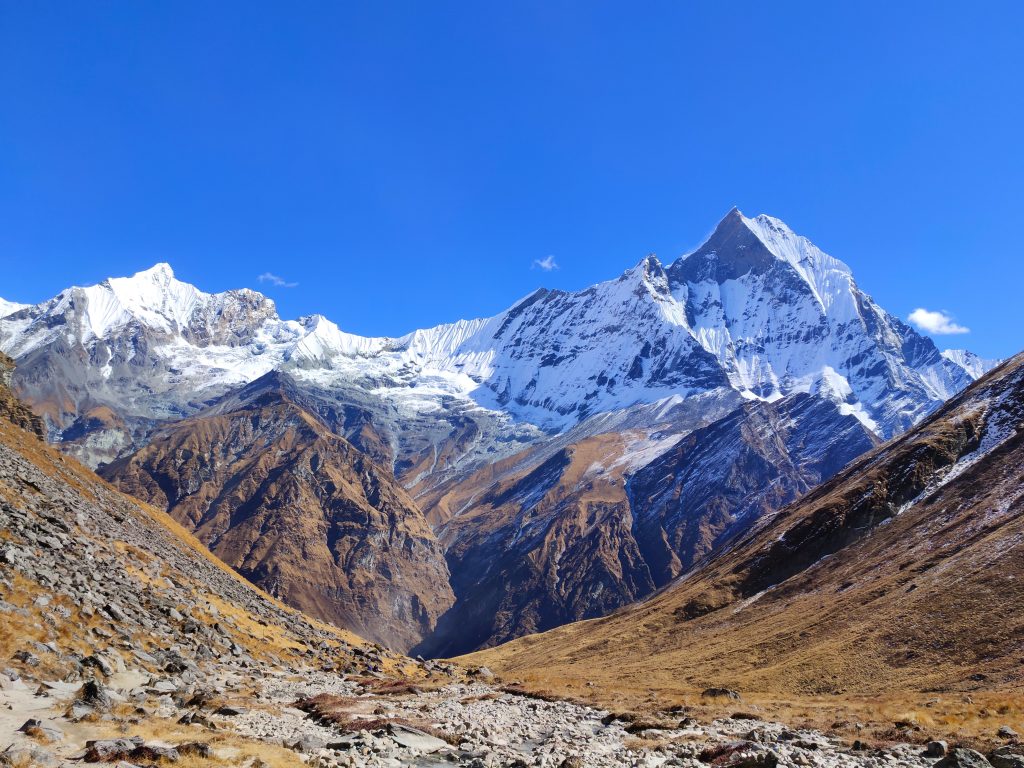
Annapurna
Annapurna Base Camp Trek with Poon Hill and Mardi Himal 12 Days
Trip Code: ABCPM4324
A grand Annapurna combination linking the Ghorepani loop, the central sanctuary basin, and the pristine subalpine ridge of Mardi Himal. Trekkers stand at three major viewpoints Poon Hill, ABC (4,130m), and Mardi Base Camp (4,500m) without repeating downhill trail sections.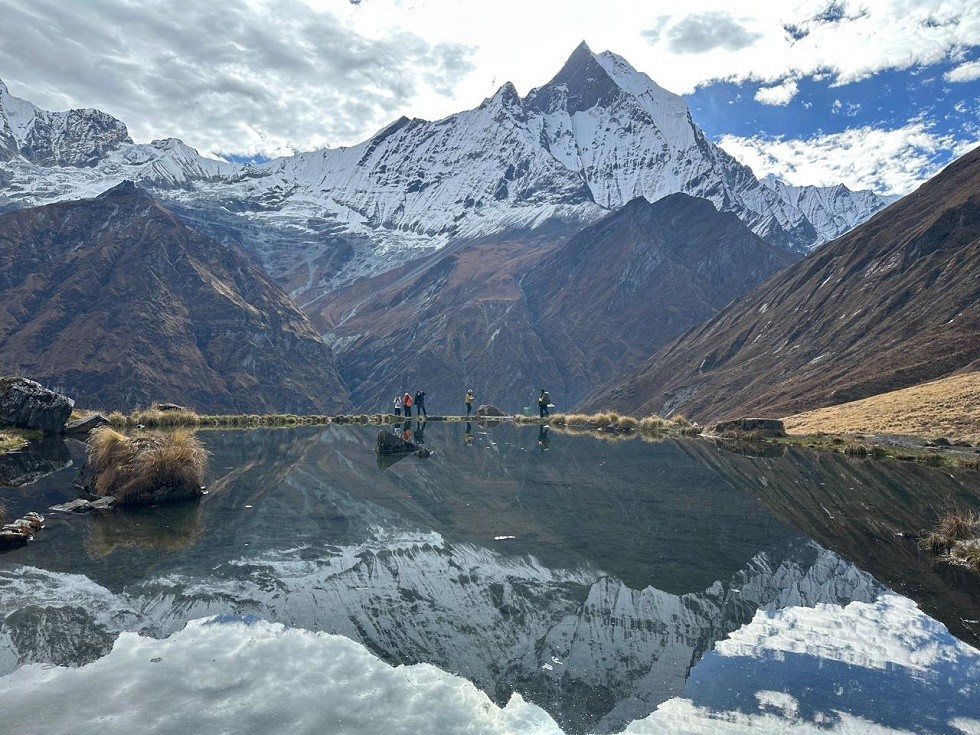






Overview
The 12 days Annapurna Base Camp trek with Poon Hill and Mardi Himal is a grand circuit combining three of the most famous mountain vantage points in the Annapurna region of Nepal. Reaching a maximum elevation of 4,500 meters at Mardi Himal Base Camp, this comprehensive journey begins and finishes in Pokhara with connections to Kathmandu. The trail merges three distinct routes into a single continuous loop, guiding trekkers through the traditional Magar and Gurung settlements of Ulleri and Ghorepani, ascending into the glacial basin of the Annapurna Sanctuary, then traversing across to the pristine subalpine ridge of Mardi Himal. By linking these trails, travelers experience the full spectrum of Annapurna landscapes from river valleys and rhododendron woodlands to high glacial amphitheatres and open ridge lines.
Trip Highlights
- Three Premier Viewpoint Summits: Experience sunrise views from Poon Hill at 3,210 meters, stand inside the Annapurna Sanctuary at 4,130 meters, and walk the high ridge to Mardi Himal Base Camp at 4,500 meters.
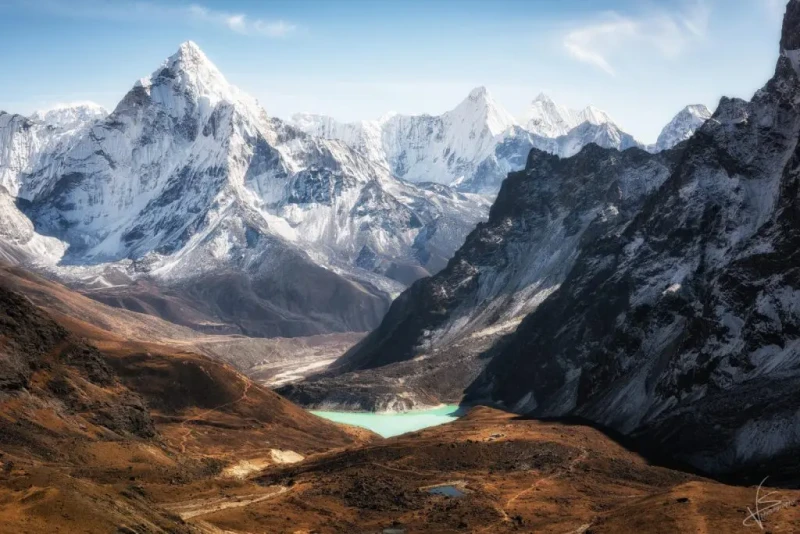
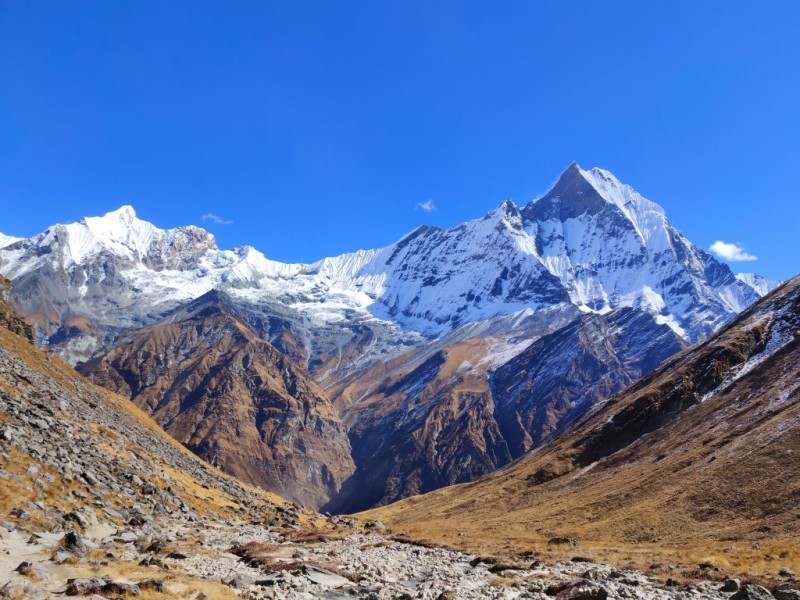
- Panoramas of 8,000-Meter Giants: Observe clear sightlines of Dhaulagiri I at 8,167 meters and Annapurna I at 8,091 meters alongside Machhapuchhre, Annapurna South and Nilgiri.
- Natural Mineral Hot Springs at Jhinu Danda: Soak in geothermal hot springs located along the banks of the roaring Modi Khola River to soothe muscles after descending from base camp.
- Diverse Ecological Transitions: Trek through dense bamboo forests, oak woodlands and blooming rhododendron canopies before climbing onto high alpine glacial terrain and narrow subalpine ridges.
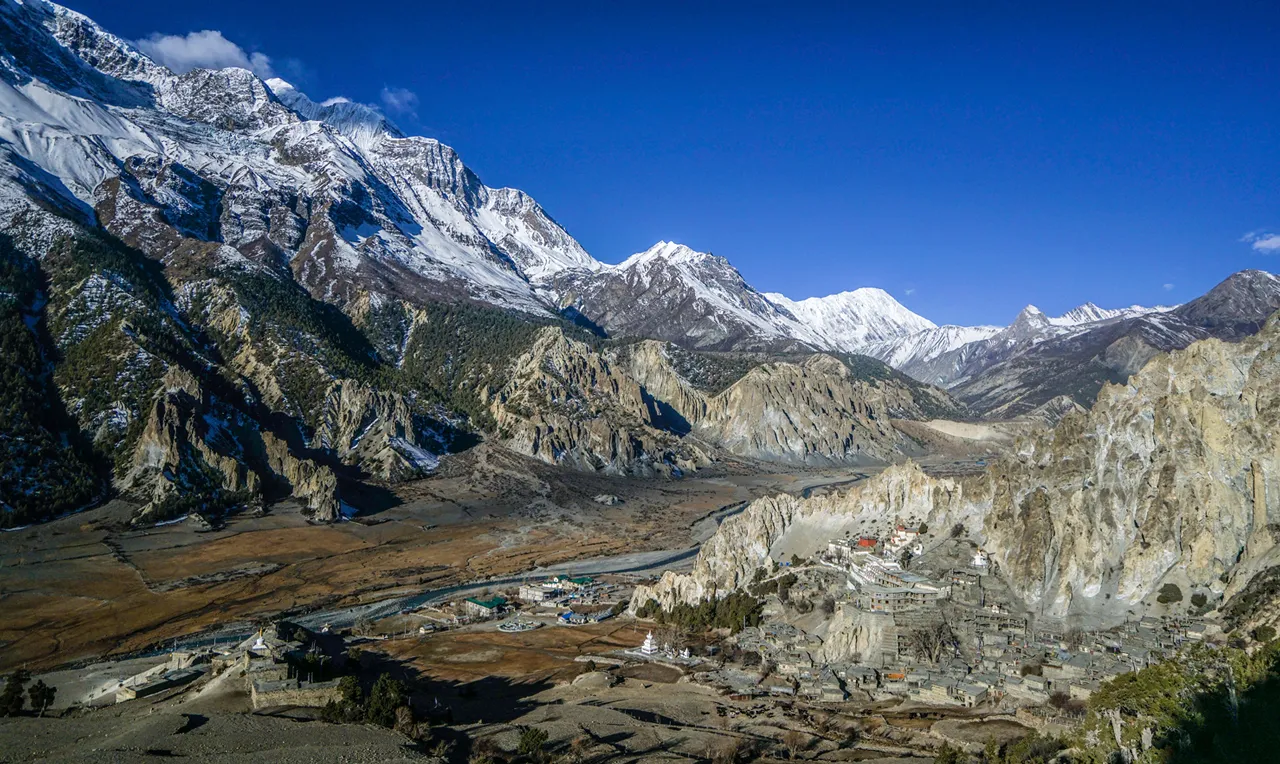
- Rich Cultural Immersion: Pass through historic mountain settlements including Ghorepani, Tadapani, Chhomrong, Landruk and Siding Village, experiencing genuine Gurung and Magar hospitality.
- Complete Annapurna Loop Circuit: Link the lower Ghorepani loop, the central sanctuary sanctuary corridor and the eastern Mardi ridge without duplicating downhill walking sections.
Practical Planning and Traveler Guide
Combining three major trekking routes into a 12 day schedule requires good physical fitness and endurance. Daily walking durations range between 5 and 8 hours over varied mountain terrain including stone staircases, forest tracks, glacial moraines and narrow ridge paths. Pre-trip cardiovascular training such as running, cycling, swimming and weighted stair workouts for 6 to 8 weeks prior to departure builds necessary stamina. Carrying two lightweight trekking poles helps absorb impact on lower joints during sustained downhill step descents. Spring from March to May and autumn from September to November offer clear skies, stable weather conditions and optimal visual clarity.
Altitude Awareness and Pacing
Reaching a maximum elevation of 4,500 meters at Mardi Himal Base Camp and 4,130 meters at Annapurna Base Camp demands careful altitude management. Trekkers should maintain a steady, unhurried walking pace across higher sections to allow proper acclimatization. Drinking 3 to 4 liters of clean water daily helps maintain fluid balance and prevents altitude dehydration. Travelers must continuously monitor for early symptoms of Acute Mountain Sickness including headaches, nausea, dizziness and fatigue, informing their guide immediately if symptoms occur.
Required Permits
Foreign trekkers entering the combined Annapurna circuit must obtain two official permits prior to departing Pokhara or Kathmandu.
- Annapurna Conservation Area Permit (ACAP): Covers entry and environmental conservation across protected park lands, costing 3,000 Nepalese Rupees for foreign nationals and 1,000 Nepalese Rupees for SAARC nationals.
- Trekkers' Information Management System (TIMS) Card: Registers hiker safety details and trail location data for emergency management, costing 2,000 Nepalese Rupees.
- Permit Registration: Both permits can be obtained at official Nepal Tourism Board counters in Kathmandu or Pokhara. Travelers must carry valid passport copies and physical passport photos for registration checks.
Teahouse and Dining
Teahouses along the combined circuit provide clean lodging in family operated lodges featuring twin single beds with foam mattresses and shared or attached bathroom facilities.
- Teahouse Amenities: Central dining rooms are warmed by wood or solar heaters during cold evenings. Device charging costs between $3.2 to $19.75 USD per session, while wireless internet access ranges from $3.29 to $7.90 USD per day.
- Food and Water: Kitchen menus serve energy rich meals including traditional Dal Bhat featuring rice, lentil soup and vegetable curry with complimentary refills. Noodle dishes, soups, fried rice, eggs, porridge and hot tea are widely served. Reusable water bottles should be filled with boiled water or treated using personal purification tablets to prevent plastic waste inside protected park zones.
Itinerary
The adventure begins early in the morning with a private vehicle drive from Pokhara toward the mountain trailheads. The scenic route passes through Nayapul and Birethanti, following off-road tracks alongside the Modi Khola and Bhurungdi Khola rivers. By driving directly to the traditional village of Ulleri at 1,960 meters, trekkers bypass lower dusty roads and commence walking right at the edge of the high hills.
Upon stepping onto the trail in Ulleri, the route leads upward into cool mountain woodlands dominated by oak, pine and rhododendron trees. The well-marked stone footpath passes through quiet settlements like Banthanti and Nangethanti where travelers often stop for warm tea and lunch. As elevation rises, the air grows cooler and glimpses of snow-capped peaks begin to appear through the canopy. The trek finishes in the bustling ridge village of Ghorepani at 2,860 meters, a traditional Magar settlement that offers comfortable mountain teahouses and views of Mt Dhaulagiri across the valley.
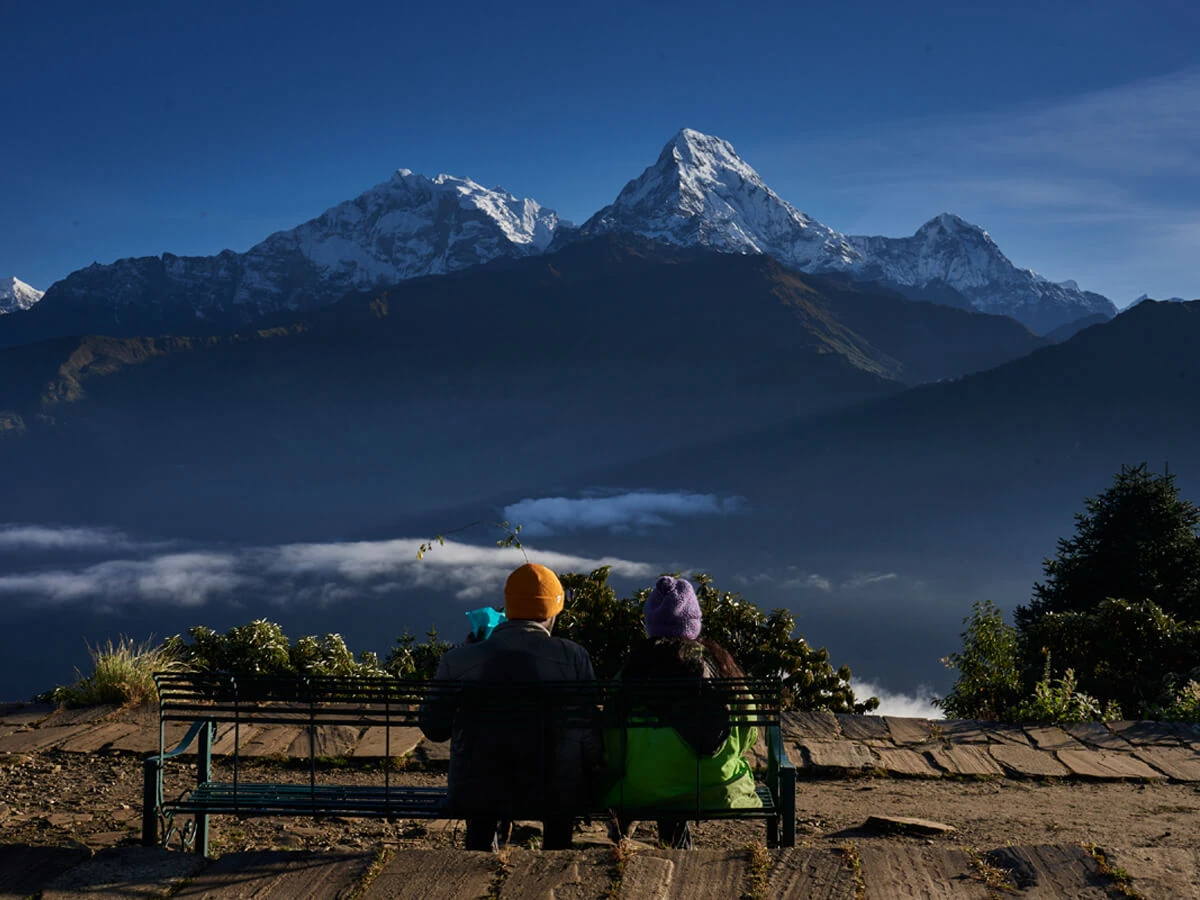
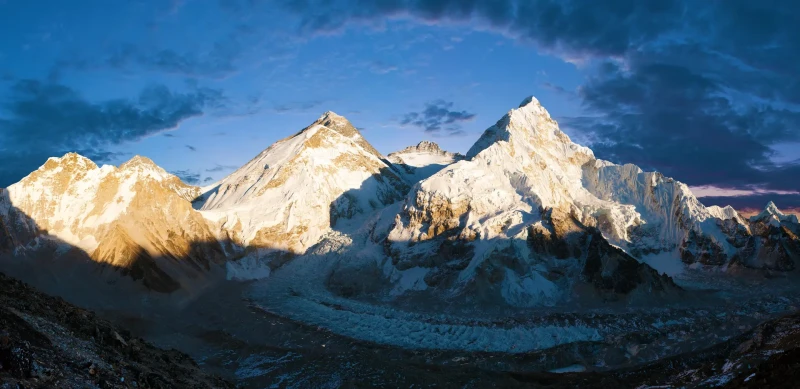
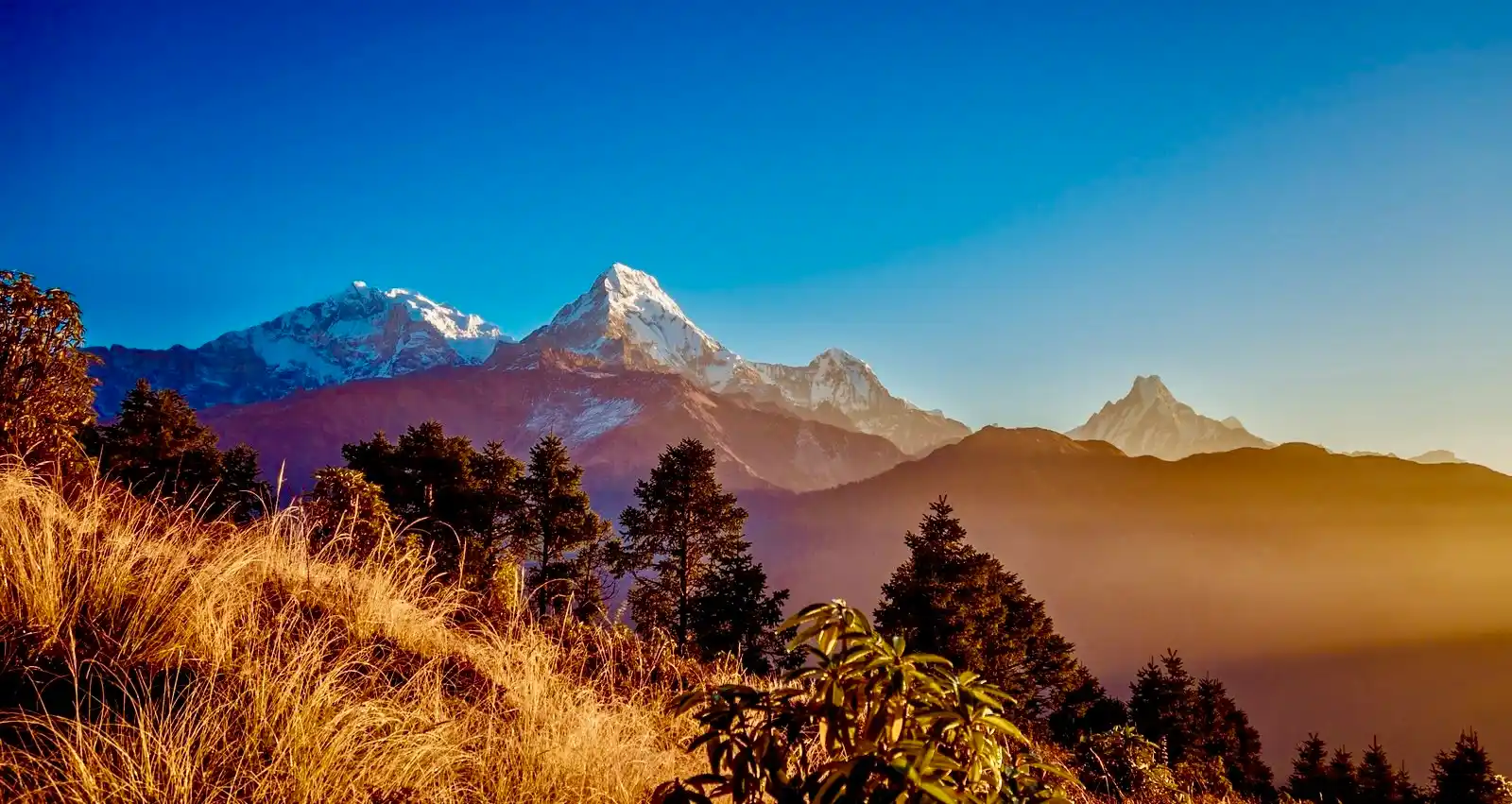
The day starts pre-dawn around 4:30 AM with a flashlight-lit hike up the well-paved stone stairs leading to the summit of Poon Hill at 3,210 meters. Reaching the observation tower before sunrise, trekkers witness the morning sun illuminate the giant peaks of the Annapurna and Dhaulagiri mountain ranges. Golden light spreads across Dhaulagiri I, Annapurna South, Annapurna I, Nilgiri, Hiunchuli and the sacred summit of Machhapuchhre. After capturing photographs and soaking in the 360-degree panoramic views, the trail descends back to Ghorepani for a warm teahouse breakfast.
After packing gear, the journey continues along a scenic forest ridge trail heading toward Deurali Pass at 3,090 meters. The footpath undulates through moss-covered rhododendron wilderness, deep pine forests and dramatic canyon valleys, offering periodic mountain vantage points along the way. Crossing small mountain streams and cascading waterfalls, the path climbs briefly past Banthanti before settling into the secluded settlement of Tadapani at 2,630 meters. Tadapani is perched on a forested hill directly facing Annapurna South and Machhapuchhre, providing spectacular sunset photo opportunities straight from local teahouse courtyards.
Leaving Tadapani in the morning, the trail descends steeply through shaded forests of oak and rhododendron toward the Kimrong Khola riverbed. Crossing a wooden suspension bridge over the clear river, the footpath begins a sustained uphill climb through terraced farmlands and small hillside hamlets. The path leads to the cliffside Gurung village of Chhomrong at 2,170 meters, which serves as the primary gateway into the upper Annapurna Sanctuary.
After enjoying lunch in Chhomrong with direct view lines of Annapurna South and Machhapuchhre, trekkers descend thousands of stone steps into the Chhomrong Khola river valley. Crossing the river via a long suspension bridge, the trail ascends steeply up the opposite stone staircase to Sinuwa at 2,340 meters. Sinuwa features comfortable teahouses situated high above the Modi Khola gorge, offering a quiet environment for an overnight stay.
Leaving Sinuwa after breakfast, the trail enters a dense sanctuary forest dominated by bamboo, rhododendron and oak trees. The footpath undulates along the western slope of the Modi Khola gorge, offering cool shade and frequent stream crossings. The route passes through quiet forest settlements like Bamboo and Dovan where travelers often stop for light refreshments and warm tea.
As elevation rises beyond Dovan, the lush subtropical forest transitions into subalpine shrubland alongside the roaring river. The trail passes Hinku Cave, an overhanging rock ledge historical expeditions used for shelter, before ascending through rocky canyon terrain. The day completes in Deurali at 3,230 meters, a high valley settlement nestled between steep granite cliffs marking the gateway to the upper high alpine region.
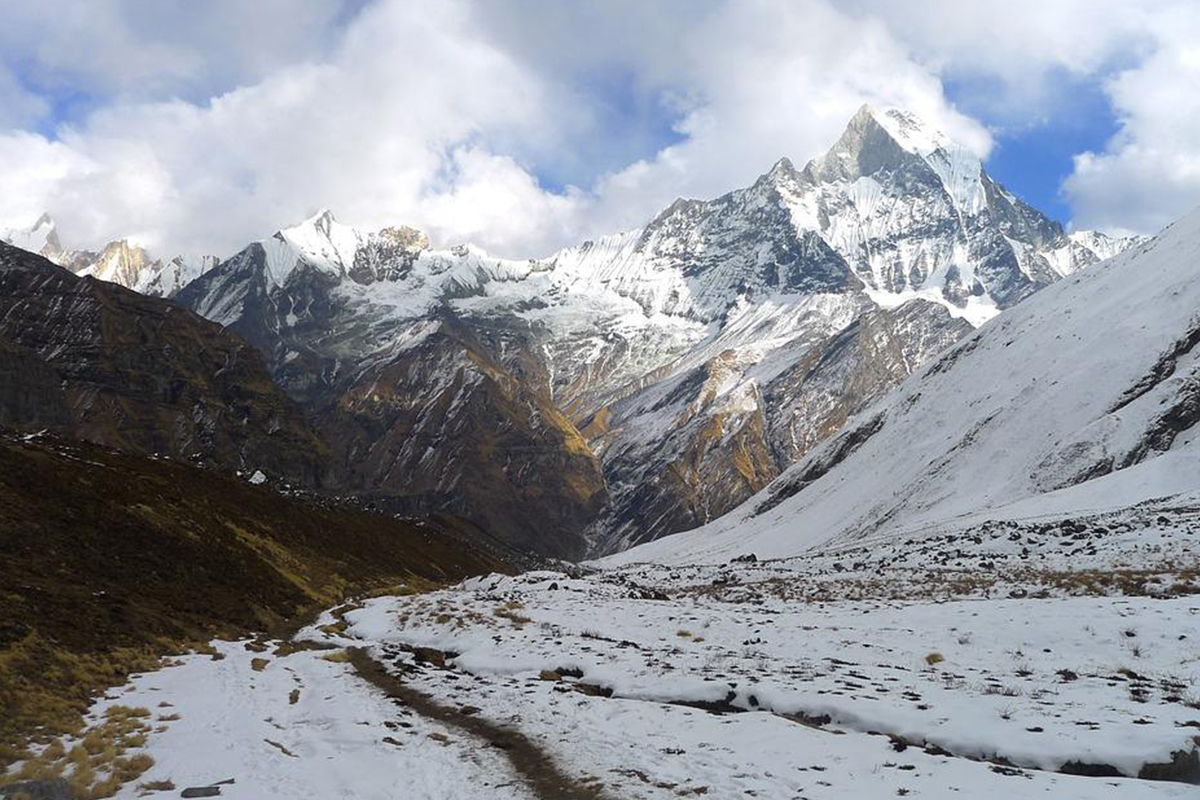
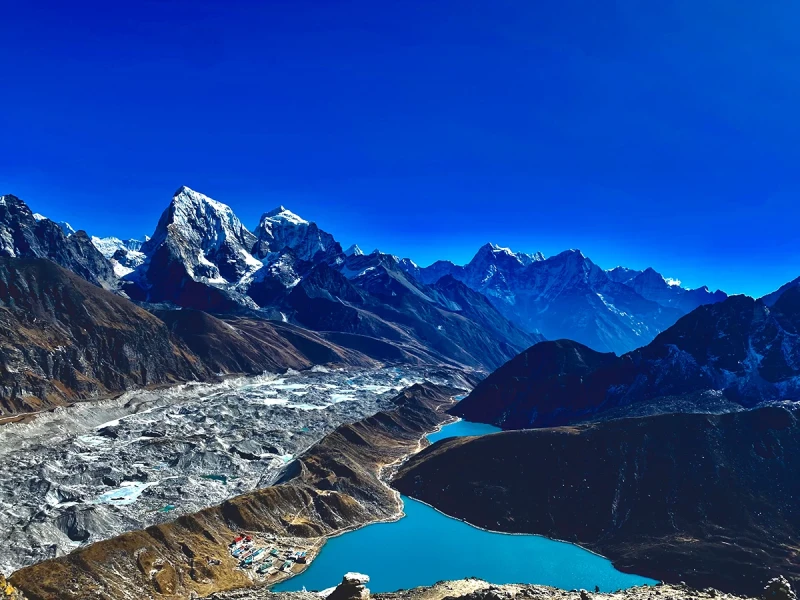
The journey continues morningward out of the narrow gorge as the valley opens up into the glacial amphitheater of the Annapurna Sanctuary. Following the upper Modi Khola River, tree lines gradually disappear and alpine meadows take over the landscape. The trail leads toward the double summit of Machhapuchhre, arriving first at Machhapuchhre Base Camp at 3,700 meters for a rest break surrounded by towering mountain walls.
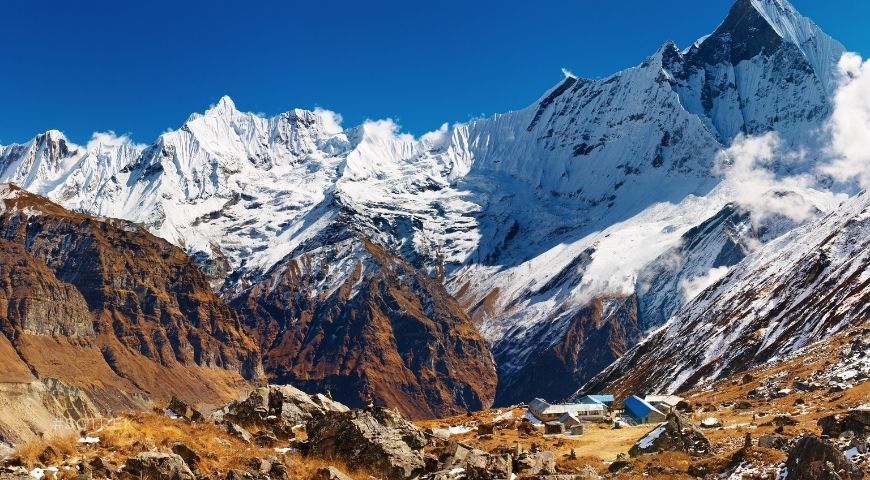
Leaving Machhapuchhre Base Camp, a gentle and steady climb along an open glacial ridge leads straight into Annapurna Base Camp at 4,130 meters. Surrounding the base camp is a massive 360 degree wall of rock and ice featuring Annapurna I, Annapurna South, Hiunchuli and Tent Peak. Trekkers settle into high altitude teahouses for the night, witnessing golden sunset colors across the vast glaciers.
The day begins pre-dawn as trekkers gather outside to watch the morning sun strike the south face of Annapurna I. As golden light turns the glaciers from white to gold, travelers capture photographs before beginning the return trek down the mountain. Because the route retraces the Modi Khola valley, downhill walking speed increases significantly as oxygen levels rise with every descended hour.
The path descends past Machhapuchhre Base Camp, Deurali, Hinku Cave and Dovan. Re-entering the dense bamboo and oak forest, the air grows warmer and trail conditions flatten into gentle undulations. By late afternoon, trekkers reach Bamboo at 2,310 meters for dinner, a hot drink and a comfortable teahouse stay.
Leaving Bamboo in the morning, the trail ascends through dense forest to Sinuwa before descending the stone staircases into the Chhomrong Khola riverbed. Trekkers make the steep stone climb back up to Chhomrong village before turning off onto a descending trail leading down toward Jhinu Danda at 1,780 meters.
At Jhinu Danda, trekkers take a short side trail down to the banks of the Modi Khola River to soak in natural warm mineral pools, relaxing tired legs after days of mountain hiking. After visiting the hot springs, the trail crosses a long suspension bridge over the Modi Khola River and follows a scenic contour path through terraced farmlands to Landruk at 1,565 meters, a traditional Gurung village offering picturesque views of Annapurna South.
Leaving Landruk after breakfast, the trek departs the main sanctuary trail and heads northeast toward the quiet Mardi Himal ridge. The path starts with a gentle walk through agricultural terraced fields before embarking on an uphill climb into dense, pristine forests of oak, maple and rhododendron.
This section of the trail is significantly quieter, offering a serene wilderness experience away from main trekking crowds. The footpath climbs steadily up the forested hillside, with soft moss-covered ground underfoot and occasional bird calls through the trees. By late afternoon, trekkers arrive at Forest Camp, locally known as Kokar, at 2,550 meters for an overnight teahouse stay nestled within the woods.
Leaving Forest Camp after breakfast, the trail climbs steadily through temperate woodland toward Low Camp. As elevation rises, dense trees transition into dwarf rhododendron groves and bamboo thickets, while the air becomes crisp and cool. Passing through Badal Danda, the tree line disappears completely, opening up sweeping 360 degree panoramas of the Annapurna mountain range and deep valleys below.
The final leg of the day ascends along a narrowing subalpine ridge line toward High Camp at 3,550 meters. Walking along grassy slopes with continuous view lines of Machhapuchhre, Annapurna South and Hiunchuli, trekkers experience the distinct feeling of high mountain ridge walking. High Camp features several cozy teahouses perched directly on the ridge, providing ideal vantage points to watch mountain sunset colors across snow capped peaks before an early night.
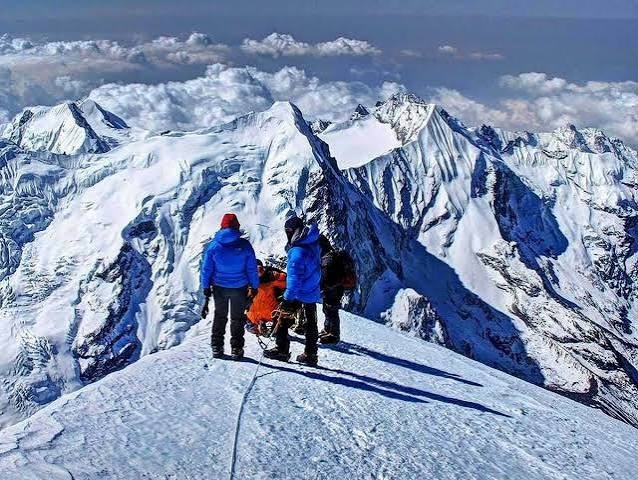
The day starts pre-dawn around 4:00 AM with a flashlight-lit hike along the narrow, rocky ridge leading toward Mardi Himal Viewpoint and Base Camp. Guided by headlamps, trekkers navigate stone steps and narrow paths along the ridge as the horizon begins to brighten. Upon reaching the Upper Viewpoint and Mardi Himal Base Camp at 4,500 meters, travelers witness sunrise over the Annapurna massif, with Mount Machhapuchhre standing directly ahead in striking detail.
After spending time photographing the mountain panorama and enjoying warm tea at high altitude, trekkers retrace their steps down the ridge back to High Camp for a well earned breakfast. After packing gear, the descent continues down the same ridge line past Badal Danda to Low Camp at 2,970 meters. Arriving back in the shelter of the forest line, travelers enjoy a relaxing evening at a lower, oxygen-rich elevation.
Leaving Low Camp in the morning, the trail leaves the main ridge and descends steeply through quiet, pristine forests toward the Mardi Khola valley. The footpath winds down through dense rhododendron, oak and bamboo groves, crossing clear mountain streams and cascading waterfalls. As the elevation drops, the forest gives way to terraced farm fields and traditional rural hamlets, providing an authentic look into local mountain agriculture.
By midday, trekkers reach Siding Village at 1,700 meters, a classic Gurung settlement featuring traditional stone houses and rich cultural hospitality. After resting and enjoying a local lunch, travelers board a four wheel drive jeep for a scenic off-road drive along the river valley and back onto the highway to Pokhara. The drive arrives back in Lakeside Pokhara by late afternoon, allowing trekkers to unwind with a lakefront dinner and hot shower.
The final day provides flexible buffer time for rest, local city exploration and onward travel connections in Pokhara. Travelers can spend a quiet morning strolling along the shore of Phewa Lake, enjoying fresh coffee or renting a traditional wooden boat to visit Tal Barahi Temple. Other options include viewing Pokhara valley from the World Peace Pagoda or visiting the International Mountain Museum.
After a relaxing morning, travelers finalize packing and check out of their accommodations. Depending on individual schedules, travelers connect to domestic flights at Pokhara Airport or board tourist buses along the highway back to Kathmandu. Day 12 completes the grand 12 days Annapurna Base Camp with Poon Hill and Mardi Himal trek schedule with smooth travel connections.
Cost Include
- Ground transportation via private jeep or tourist bus between Pokhara, Kathmandu and trailheads.
- Annapurna Conservation Area Permit (ACAP) and TIMS card registration fees.
- Teahouse accommodation throughout the 11 nights 12 days trekking itinerary.
- Breakfast, lunch, dinner, drinking water, and sleeping bag provided during the trekking period.
- Licensed, professional English-speaking trekking guides and experienced support porters.
- Hotel accommodation in Pokhara as specified in the package.
- All applicable government taxes and service charges.
Cost Exclude
- Personal travel, medical and high-altitude emergency helicopter evacuation insurance.
- Internet Wi-Fi access and electronic device charging fees at teahouses.
- Soft drinks, alcoholic beverages and extra snacks.
- Hot showers and laundry services at teahouses.
- Tips for mountain guides, drivers and porters.
- Personal trekking gear, down jackets and sleeping bags.
Important Notes
- Weather Variability: Mountain weather across different valleys and ridges changes rapidly, requiring layered clothing systems for heat regulation.
- Essential Clothing: Pack moisture-wicking thermal base layers, fleece jackets, breathable trekking trousers, a down jacket rated for negative temperatures and windproof outer shells.
- Key Gear: Bring a sleeping bag rated for sub-zero temperatures, a sturdy 30 to 40 liter daypack with a rain cover, UV sunglasses, high SPF sunscreen, a headlamp with extra batteries and trekking poles.
- Cash Provisions: Carry sufficient Nepalese cash from Pokhara for personal expenditures, as ATMs and card processing are unavailable along the trail.
- Environmental Rules: Single use plastic water bottles are banned in upper conservation corridors, making reusable bottles and purification systems mandatory.
Photo Gallery